
TL;DR: Getting rid of old journals requires a respect for the amount of work that went into creating them. It is worth the setup effort to safely and cleanly, physically and chemically, render your old journals inert.
The Weight of the Ink
If you have arrived here, you have likely already made the hard decision: you want that stack of old journals gone. Yet, actually getting rid of them is one of the hardest physical tasks in the healing process.
You have to understand that a journal isn’t just paper; it is a storage device for ghosts. As long as the ink is dry on the page, the trauma is “Active Code.” It can be re-run at any time just by opening the cover. That is why they feel so heavy. You aren’t just carrying cellulose; you are carrying a powered-up hard drive of your history.
The Weight of the Paper
As a Pisces, my mind naturally goes toward water—specifically, the phenomenon of what happens to a piece of paper left in a pocket that goes through the washing machine. It comes out as a soft, unreadable pulp. The Reactor Protocol takes that concept and scales it up. It is designed to handle entire journals at a time, using warm water and agitation to physically and chemically dissolve the structure of the paper and render the words inert.
It is a safe, permanent process that clearly tells the universe you are ready to let go—but make no mistake, it is physical work. You aren’t just pushing a button; you will be manually processing the past—pulping, straining, and wringing it out one journal at a time. It requires effort, which is a form of respect for the courage and effort it took to write it all down.
If you need it done this second, you can. My first attempt was during a high intensity purge—I used a mop bucket and laundry detergent in my kitchen sink. Some valuable lessons were learned… and with just a little bit of prep work the process of letting go can be experienced without the distraction of managing the logistics of the chemical processes that are rendering your old journals inert.
The Reactor and the Neutralizer
We call this process The Reactor Protocol, and the bucket you will build is the Reactor Vessel. This sounds intense, and it is meant to. You need a vessel that feels strong enough to hold the weight of what you are discarding. You need a container that commands respect.
However, unlike a nuclear reactor designed to generate heat and volatility, our goal is the opposite. Our goal is neutralization. We are creating a reaction that takes “hell” and chemically renders it inert. We use the strength of the Reactor Vessel to create a space of safety where the past can be chemically dissolved efficiently and permanently.
Validating Your Decision
This is the right thing to do. Even if that stack of notebooks is sitting in a box in the attic and you never think about them, your subconscious knows they are there. They act as a physical anchor, keeping all of those old memories and emotions tethered to your life. Does just thinking about them create a physical reaction in your mind or body? That’s the confirmation that they are ready to go.
By “letting go” of them, you are breaking that chain. The paper dissolves, but the growth remains. The good parts—the lessons you have learned—are already integrated into your subconscious. Even if you don’t think they are there, they are. Your brain has archived the wisdom and it will come back to you when it is needed. You don’t need the physical backup anymore.
Leave them closed
What good can come from reading them one last time? A hit of pity, or anger? They are ready to go. You lived these moments. You survived them. The ways you grew and changed are already woven into who you are now. The journals often contain the raw, unprocessed pain—the sediment of your history. It is settled. Reading them now serves no purpose other than to sear that memory into your brain. It is okay to put them in whole.
A Safety Check: While the decision to let go is the correct one, you must use your own judgment on the timing. If you aren’t ready to do the whole stack right now, that is okay. Start with the easiest one—the volume you know holds nothing but dead weight. Releasing that single notebook will build the courage you need to handle the rest. The Reactor will be waiting for you when you are ready for the future passes.
A note on the good times
You might be worried about destroying the “good stuff”— the lessons learned, the affirmations, concert tickets, old love letters, or holiday cards. Even if those good materials were simply sitting stacked with the painful ones, they often carry the energy of that pain. Proximity matters; somehow, that heavy energy transfers to everything in the stack. Add them to the reactor purposefully. Pulping the “light” along with the “dark” consecrates the water. It reminds us that we are not just our trauma; we are the complex sum of everything we have survived and celebrated.
Keep what feels right
This section is hard because everyone’s attachments are different.
My personal strategy was one of exclusion: If an item had any kind of negative memory attached to it, I put it through the process. Even things like my tax returns from the years of COVID—documents of stress and fear—I put through this process. I wasn’t looking for things to save; I was hunting for things that weighed me down. In the end, I realized I didn’t want to save any of it. I pulped the entire stack, including the old Christmas cards.
However, that does not mean you have to be an absolutist. If you pick up a specific card or page, even if it was in the stack, and the first feeling that hits you is warmth, love, or validation, it is okay to keep it. If you separate it from the stack for long enough, the energy might dissipate over time.
If you are struggling to decide, set those ambiguous items aside. We will cover the concept of “Iterative Passes”—going through your archives in layers over time—in a future article. For today, focus on the bulk release of the things you know are heavy.
The Alternatives (And Why They Fail)
My first instinct was fire. It’s the classic move. But I remember hearing the legend of the “Love Letter Fire” around a campfire here in Colorado. The story went that a woman tried to burn a letter from her estranged husband, lost control of the flame, and burned down the forest.
The grim reality behind the legend is the 2002 Hayman Fire. It started exactly that way—one letter in a ring. The result was 138,000 acres, 133 homes, and the loss of human lives. Paper ash floats. I didn’t want to burn down my new life just to get rid of the old one.
Throwing them in the garbage is technically the easiest option, but to me, it felt like abandonment. To discard a piece of my soul along with yesterday’s coffee grounds doesn’t do it justice. And… more importantly, do I really want to entrust my deepest, most vulnerable secrets to the chaotic fate of the municipal waste system? I have seen more than one part of the public garbage system and as truly magnificent as it is, bags rip, bins tip, and things get seen. I did not want to leave my history exposed to chance.
The Shredder promises a ruthless, cold, kinetic efficiency. It feels like a machine eating your secrets. But in reality? It is a jam-prone nightmare. Feeding journals page-by-page turns a moment of release into hours of administrative drudgery. And strictly speaking, the data is still there—just in strips. With enough tape and obsession, it can be reconstructed. The Reactor Protocol offers permanent erasure. It renders the pages inert, unreadable, and irrevocable.
Don't Procrastinate
Beyond the physical danger, methods like burning introduce massive logistical roadblocks. You have to find a legal burn pit, gather wood, check weather conditions, and manage embers. These hurdles are just procrastination in disguise. They give you valid excuses to keep the books for “one more week” until the weather clears.
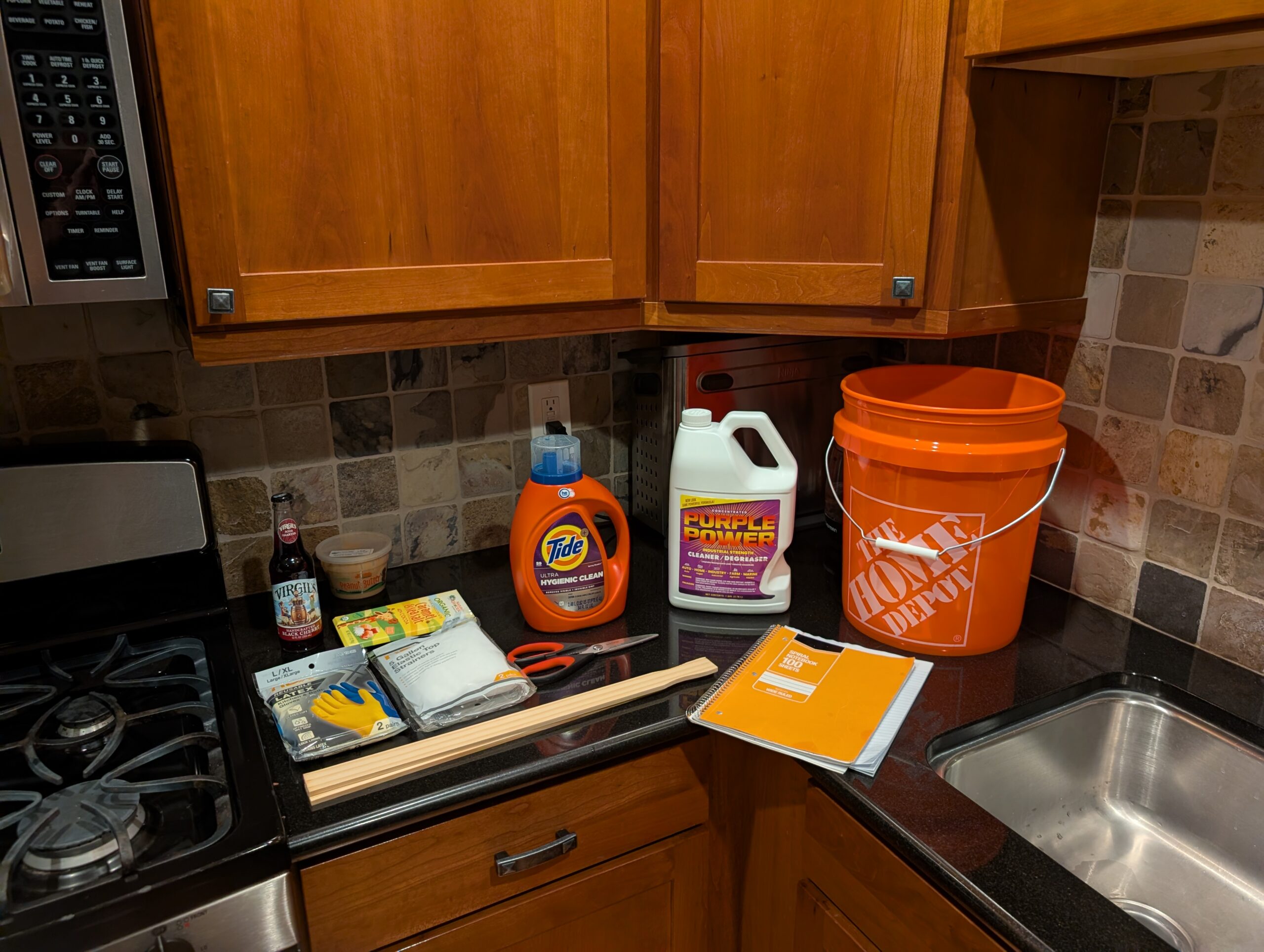
The Reactor Protocol removes those excuses. Chances are, there is a hardware store within 20 minutes of where you are sitting right now. You can get everything you need for less than $40. You could be processing your first journal within the hour.
Water Consecration offers immediacy. You can do this tonight in your bathroom. It is safe, contained, and permanent. Do not give yourself an excuse to wait.
Ready to build your reactor? Read Part 2: The Hardware.